Bathroom Renovation · DUBLIN HOMES
Bathroom Renovation Cost in Dublin: Budget, Value & Timeline
A useful bathroom budget covers preparation and installation as well as the suite you can see. This Dublin guide answers seven common questions about cost, mistakes, value, affordable finishes and the time needed for a refit—with a worked budgeting example and clear questions to ask before booking.
What is a realistic budget for a bathroom renovation in Dublin?
For an initial planning reference, one Dublin renovation contractor publishes €8,000–€14,000 for a standard mid-range bathroom renovation in 2026. That is a provider's advertised guide, not a measured Dublin average or a NU Home Services price. The room's condition, supplied products and included work determine whether that reference is relevant to your project. See the published cost guide.
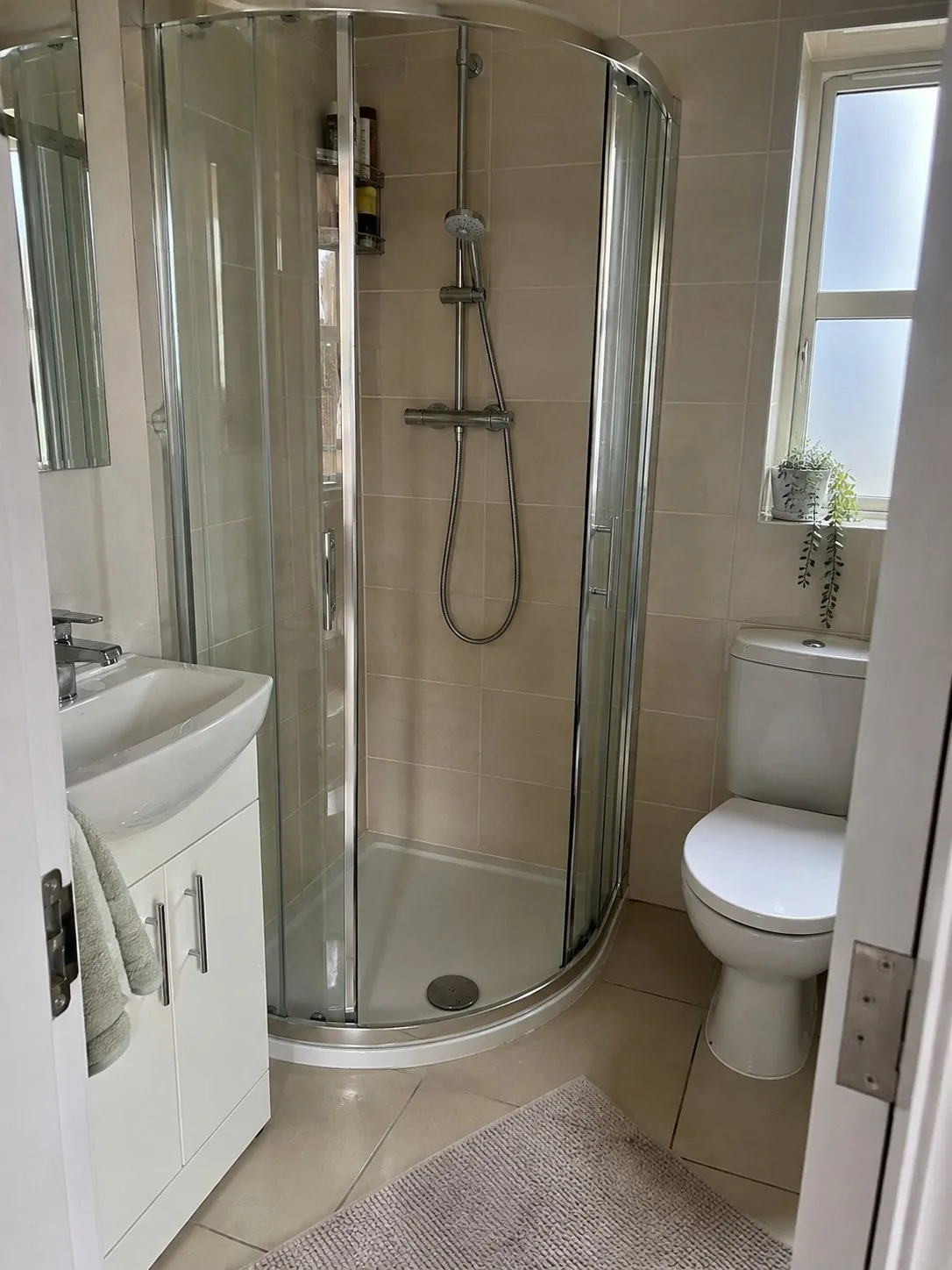
Start by deciding which project you need. A cosmetic refresh keeps sound fittings and changes selected finishes. A full refit removes and replaces the bathroom while retaining its layout. A reconfiguration moves fittings or changes the shower arrangement, potentially adding work to pipework, drainage and the supporting surfaces. A small ensuite can still need all the trades involved in a larger bathroom.
Build a budget that includes the whole job
- Removal and disposal: existing suite, tiles, protection of access routes and waste collection.
- Preparation: repairs to exposed walls and floors, suitable bases and the specified waterproofing system.
- Installation: plumbing, relevant electrical work, ventilation, tiling and fitting the chosen products.
- Purchases: sanitaryware, taps, shower enclosure, vanity, tiles, trims and accessories.
- Finishing and household arrangements: decoration, final checks and alternatives while your only bathroom is unavailable.
Ask which items are fixed prices, which are provisional allowances and which are excluded. Confirm whether the total includes VAT where applicable. A supply-and-fit quote and a labour-only quote cannot be compared using their totals alone.
A worked planning example
Suppose a written quote is €9,500, including the agreed products and applicable VAT, but excluding a €450 mirror you will buy separately. Your known spend is €9,950. If you choose a 10% reserve against that amount, keep another €995 available, giving a planning total of €10,945. These are illustrative figures, not a quotation. The reserve should reflect the unknowns identified during assessment; it does not authorise extra work without your approval.
For an apartment in Dublin, also confirm delivery access, lift bookings, working hours and waste arrangements. For an older house, ask what can be assessed before strip-out and what remains concealed. Those details can matter more than choosing a slightly cheaper basin.
What is the most expensive part of a bathroom renovation?
There is no single item that is always the most expensive. In a full refit, the combined installation and preparation work can be a larger commitment than any individual fitting. In a premium bathroom, specialist surfaces, bespoke joinery or high-end sanitaryware can change that balance. Ask for the actual cost groups in your proposal.
Moving a toilet illustrates why layout decisions matter. The cost is not simply the new toilet: the drainage route, access to existing services, floor opening and reinstatement may all need consideration. Similarly, a level-access shower should be assessed against the existing floor and drainage before selecting the finish.
To control cost, ask for two clearly defined alternatives: one that keeps service positions and one that changes the layout. Compare the practical benefit of the change with its additional work. Retaining a layout is useful only if it gives you safe, comfortable access and a room that works.
What are common bathroom renovation mistakes?
The expensive mistakes are usually decisions made too late, incompatible products and missing preparation—not simply choosing the wrong tile colour. Use these checks before ordering:
- Buying a shower before checking compatibility. Confirm the selected unit suits the property's water supply and installation requirements. A desired spray pattern does not establish compatibility.
- Planning from floor area alone. Mark the door swing, shower opening and vanity drawers on a measured plan. Check that each can open with someone using the room.
- Choosing finishes before agreeing preparation. Ask what substrate and waterproofing approach is included for wet areas. Tile appearance alone does not establish that the construction behind it is suitable.
- Treating ventilation as an accessory. Discuss how moisture will be extracted and where the duct will run before ceilings and finishes are closed.
- Comparing incomplete quotes. Check tile allowances, waste disposal, trims, decoration, taxes and customer-supplied items line by line.
- Starting before the important products arrive. Confirm dimensions and inspect deliveries for missing or damaged parts before the room is stripped out.
- Ignoring the only-bathroom problem. Agree toilet and washing arrangements explicitly; do not assume facilities will be restored every evening.
Keep one written list of agreed changes, with their price and timing effects. Our questions to ask bathroom fitters in Dublin help turn these checks into a useful quotation discussion.
What adds the most value to a bathroom?
For everyday use, prioritise dependable performance, a practical layout, ventilation and usable storage before decorative upgrades. For resale, no individual bathroom feature guarantees a particular increase in the property's price. Local demand, the rest of the home and the quality of the work all affect buyers' decisions.
Spend first on problems a person notices while using the room: a cramped shower entrance, a basin with no place for toiletries, poorly positioned lighting or finishes that are difficult to maintain. A vanity with useful drawers can be a better improvement than a larger basin that consumes the same space without adding storage.
Think about who uses the property. A household that needs a bath may value keeping one; another may prefer a generous shower. Do not remove the home's only bath solely because a photograph of a walk-in shower looks attractive. Choose against your brief and, if selling soon, ask a local estate agent about the expectations of likely buyers.
How can you make a bathroom look expensive on a budget?
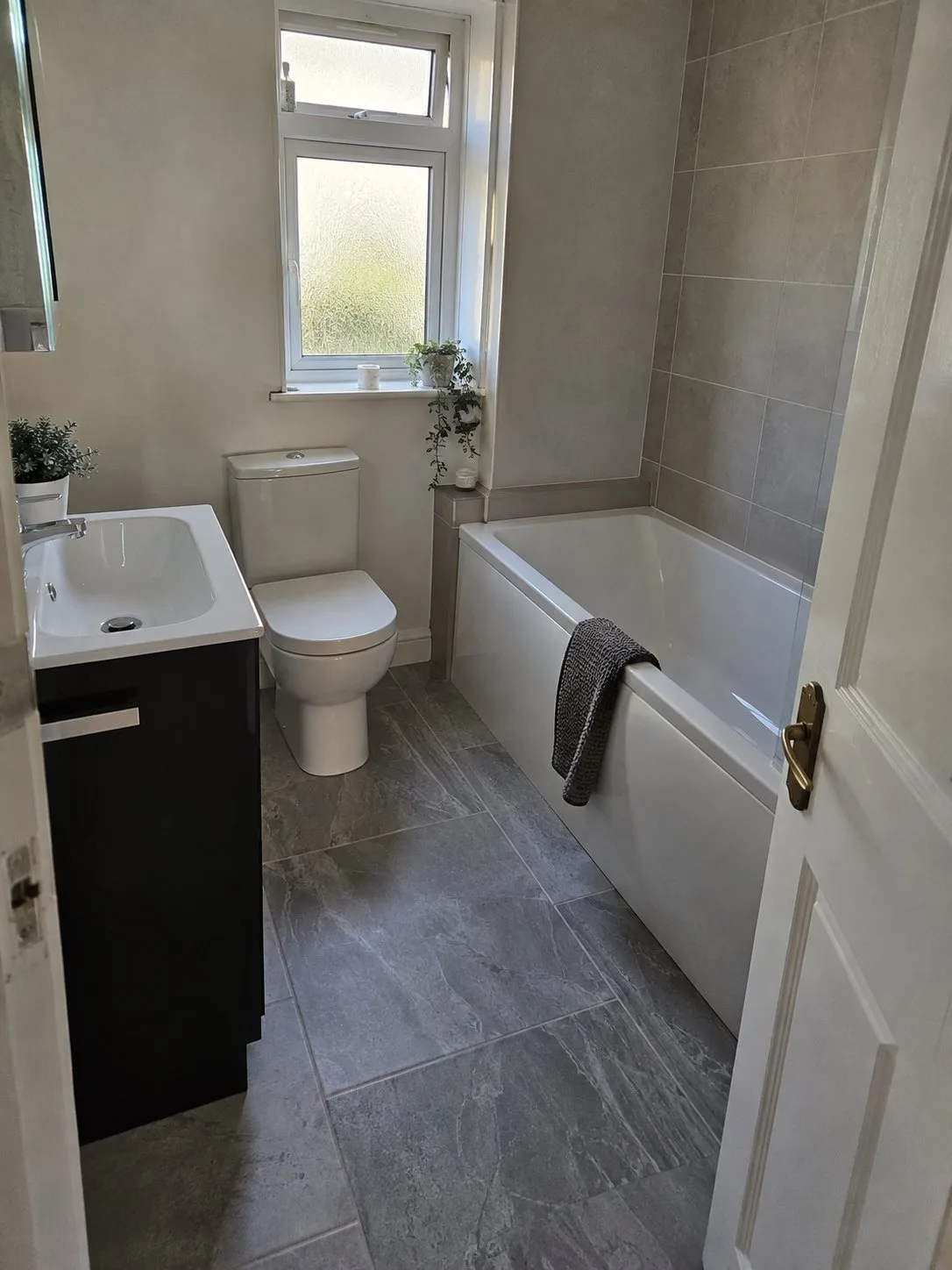
Use a restrained set of finishes and spend attention on proportion, lighting and the visible details. A coordinated room can look considered without every product being premium.
- Choose one main tile and one supporting colour instead of several competing patterns.
- Keep tap, shower and accessory finishes consistent where practical.
- Use a mirror sized to the vanity and wall, rather than automatically buying the smallest option.
- Plan lighting at the mirror as well as general room lighting, with fittings specified for their intended location.
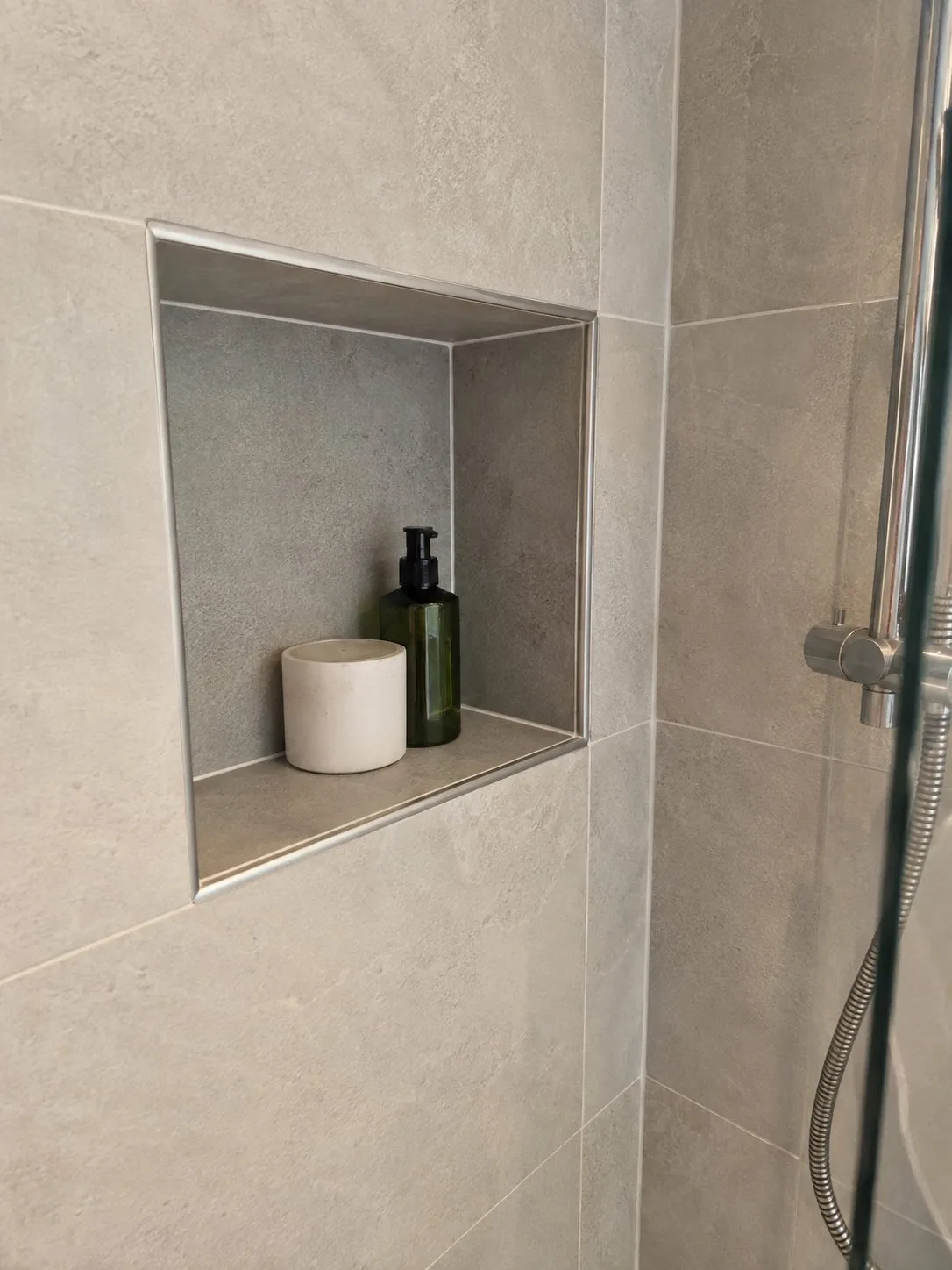
- Choose closed storage for everyday clutter and keep open shelves limited.
- Agree tile setting-out, exposed edges and trim colours before fitting begins.
If the existing layout and surfaces are sound, a coordinated vanity, mirror and decoration update may have more visual impact than replacing everything with the cheapest available products. Do not cover damp or damaged areas to achieve a quick cosmetic result. Assess and resolve the underlying problem first.
For a compact room, see our small bathroom layout guide and bathroom tile selection checklist.
What is the cheapest way to renovate a bathroom?
The lowest-cost approach is usually a targeted refresh that retains serviceable fittings and the existing layout. It is appropriate only when the underlying room is in sound condition. A leaking shower or damaged floor needs an assessment, not a cosmetic cover-up.
Separate the project into three lists: faults that need repair, improvements you will use every day and optional appearance changes. Obtain a price for the first two lists before deciding how much remains for the third. Ask whether sound accessories can stay and whether decoration can be limited to the surfaces that need it.
Save on unnecessary layout changes, bespoke sizes and finishes that require additional preparation or detailed cutting. Avoid saving by omitting necessary preparation, waterproofing, ventilation or appropriate specialist installation. Choosing products with replaceable parts and accessible maintenance points also helps avoid a cheap purchase becoming an expensive repair.
If you supply products yourself, agree responsibility for measurements, compatibility, delivery and missing parts. The lowest online product price is not necessarily the lowest installed cost.
How long does a bathroom renovation take?
A straightforward full refit with the layout retained may be planned around 5–10 working days on site, but your contractor must confirm the programme for your bathroom. Dublin provider Kae's Tiling publishes that range for a standard refit and longer periods for layout or structural changes. This is an external planning reference, not a NU Home Services completion promise. Read the provider's timeline guide.
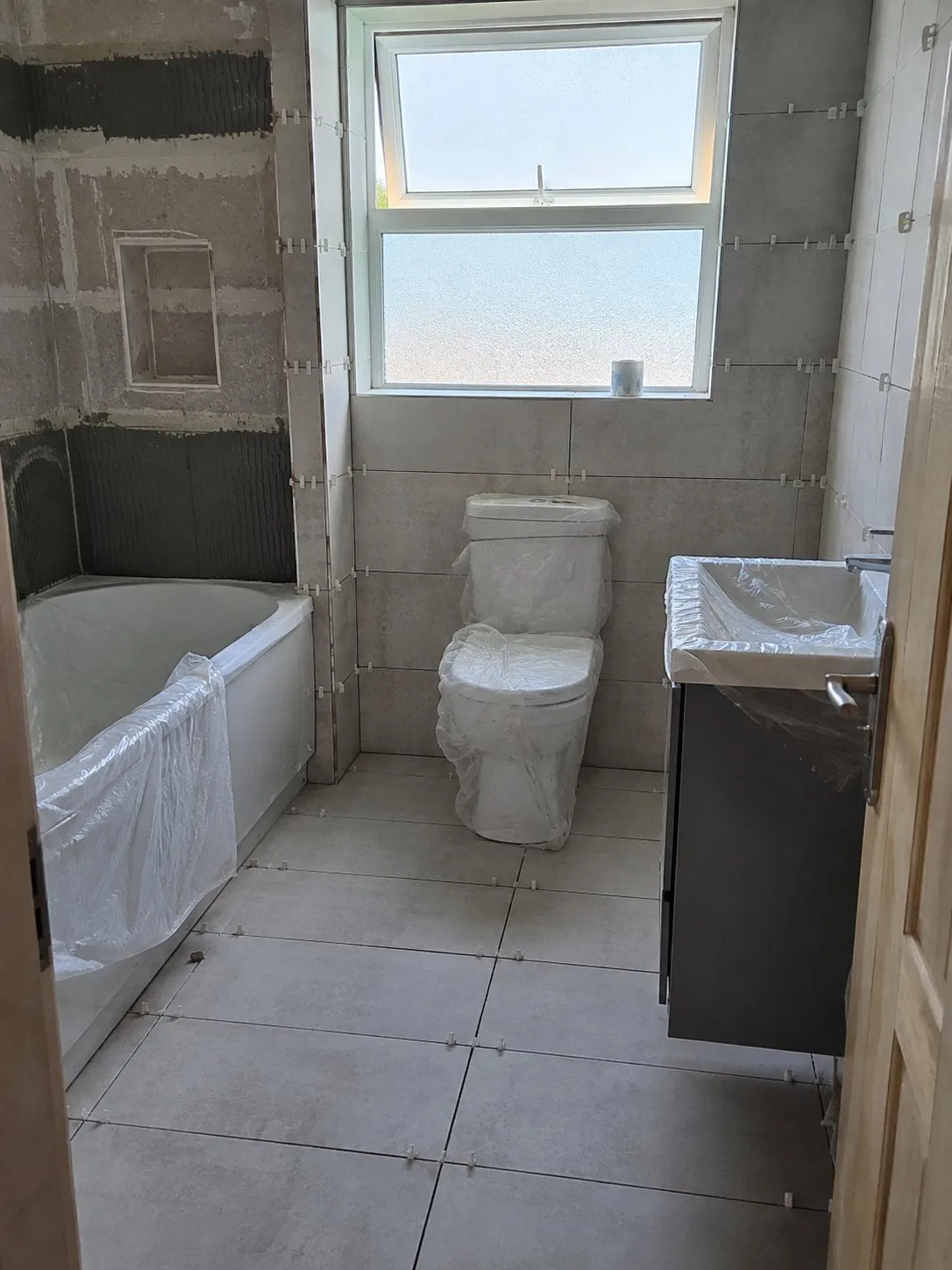
On-site work is only part of the elapsed time. Product selection, ordering and booking come first. The installation then moves through strip-out, assessment, service work, preparation, tiling, fitting and handover. Product-specific drying and curing instructions determine when the next stage can begin and when the shower can first be used.
Request three dates or milestones: the start of work, the expected return of toilet and washing facilities, and final handover. Ask how concealed damage, late deliveries or variations will affect them. Keep some flexibility around the finish rather than scheduling guests to arrive on the final installation afternoon.
Our bathroom renovation timeline guide explains the stages and household arrangements in more detail.
Get a bathroom renovation quote for your Dublin home
NU Home Services discusses bathroom renovation and refurbishment across Dublin from Saggart, including Tallaght, Citywest, Clondalkin, Rathcoole and Lucan. Start with your location, approximate room dimensions, what you want to keep, what needs to change and whether this is your only bathroom.
Tell us your preferred timeframe and any products already selected. Photographs can support the initial conversation, but the final scope depends on assessing the work. We can discuss priorities and a property-specific quotation rather than treating an online budget range as a fixed package.
Explore NU Home Services bathroom renovation in Dublin, or use the quote button below to explain your project.
Sources and price context
External guides checked on 20 October 2026. Published contractor figures describe their own guidance and scope, not an independently measured market average. The worked budget above is illustrative. Confirm inclusions, taxes, product choices and dates in your own quotation.
YOUR NEXT STEP
Request a quote for your project
Tell us your Dublin location, what you would like to change and your preferred timeframe. Photos can help us understand the scope.
Request a QuotePrefer email? info@nuhomesvc.com